Picking the right China Denim Corset Top manufacturer? Honestly, it takes a lot more than just flipping through catalog pics or comparing factory quotes. If you're buying globally, you need proof they've actually done this before—steady production, and communication that doesn't leave you guessing. A good supplier should really know their stuff when it comes to denim weight, stretch recovery, corset boning, panel shaping, and size grading. Because those little details? They're what make or break comfort, structure, and how many returns you end up dealing with at retail.
Honestly, any professional manufacturer should send development samples before you commit to bulk production. That way, buyers can check things like stitch density, edge finishing, metal hardware, and wash consistency. The little details really do matter—uneven topstitching, for instance, can make even a premium product look off. And a reliable factory? They should also walk you through fabric composition, testing procedures, packaging options, lead times, and export documentation. Sure, independent audits or well-known certifications can definitely help boost a supplier's credibility. That said, buyers shouldn't just take them at face value—it's still a good idea to verify every document yourself.
Honestly, “best” doesn’t really mean the same thing to everyone. One buyer might care most about low minimum order quantities, while someone else needs serious sampling support and the ability to scale up in a big way. China gives you a huge manufacturing network, sure—but quality can differ a lot from one workshop to the next. And no supplier is perfect. Even a sample that looks great can still hide production risks down the line. So if you’re a smart buyer, ask for pre-production approval, set inspection checkpoints, and get your quality standard in writing. And honestly, they should talk about responsible labor practices too—plus making sure the product is legally compliant in whatever market it's headed to. When you source thoughtfully, you're basically linking good design know-how with reliability you can actually measure. That kind of balance? It's what helps a Denim Corset Top hold up in real retail situations, not just look pretty in some perfectly edited online photo.
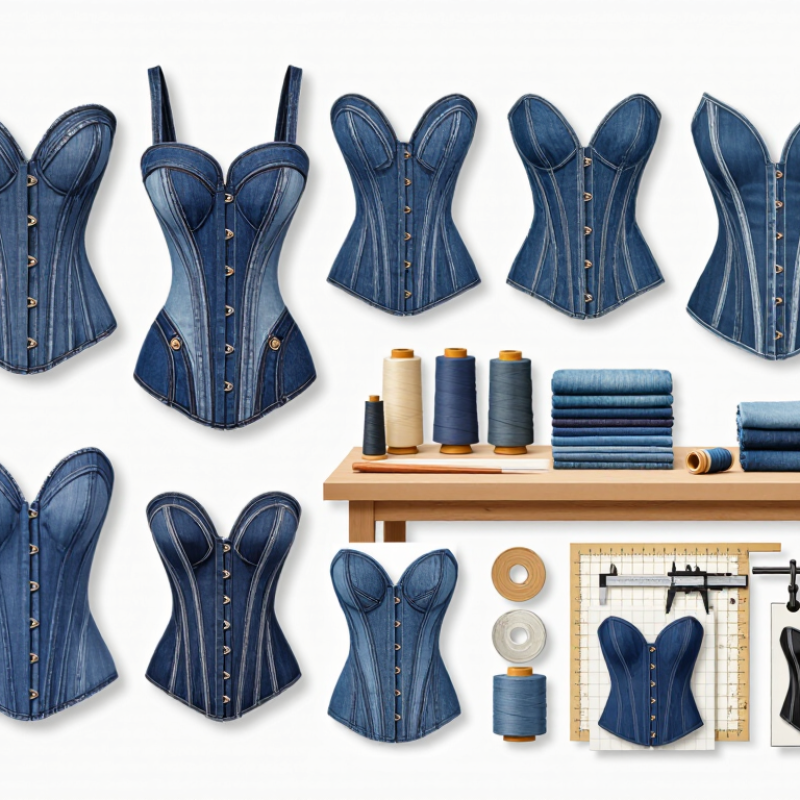
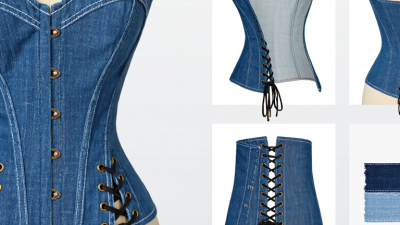
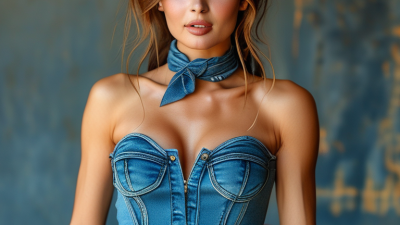
A Denim Corset top combines denim’s structured surface with corset-inspired shaping. It usually includes panel seams, a close waist, adjustable straps, and metal hardware. Unlike traditional corsets, it often uses lighter denim with elastane for easier movement. Its defining details are visible stitching, reinforced edges, and a firm but wearable fit.
Grand View Research estimated the global denim jeans market at about USD 70.1 billion in 2022, with projected growth through 2030. This wider denim demand supports uses in casualwear, festival styling, layering, and online capsule collections.
For global buyers, Chinese manufacturers can offer pattern development, washing tests, size grading, and small-batch sampling. Practical checks matter. A dark enzyme wash may look refined, but rubbing can transfer color onto light garments. Heavy boning can improve shape, yet it may reduce comfort after two hours. Textile Exchange reported that cotton represented roughly 22% of global fiber production in 2023. Buyers should therefore request fiber composition, shrinkage results, colorfastness records, and recycled-content evidence. Product photos alone are not enough.
Tips: Ask for a real-wear sample. Test sitting, bending, and repeated fastening. Confirm seam strength near the bust and waist. Review measurements after washing. A perfect sample can still fail in bulk production, and that risk deserves honest review.
China Best Denim Corset Top Manufacturer for Global Buyers?
A reliable denim corset manufacturer should prove consistency before discussing large orders. Textile Exchange’s Materials Market Report 2024 states that global fiber production reached 124 million tonnes in 2023. This pressure makes material traceability increasingly important. Ask for cotton origin records, fabric composition, and supplier documentation. A capable factory should also explain its washing process, shrinkage control, and dye lot management. Denim corsets need firm structure, but excessive stiffness can cause discomfort. Request physical samples in several sizes. Check seam strength, boning channels, zipper performance, and wash color under natural light. Small defects become expensive at scale.
Production evidence matters more than polished photographs. Review recent export experience, monthly capacity, lead times, and quality inspection records. ISO 9001-based procedures can indicate organized control, although certification alone proves little. Independent testing should cover colorfastness, dimensional change, seam slippage, and metal safety. WRAP research has reported that extending garment use by nine months can reduce carbon, water, and waste footprints by about 20–30%. Better durability supports that goal. Still, factories may overstate test performance. I would verify key reports with an accredited laboratory.
Tips: Compare three samples, not one. Place measurement tolerances in writing. Ask for a pre-production sample before bulk cutting. Confirm who pays for remake costs. Keep communication records. A factory that answers slowly during sampling may struggle after payment. That warning is easy to ignore.
Key criteria for choosing a reliable denim corset manufacturer
Materials and construction decide whether a denim corset top feels supportive or restrictive. According to Textile Exchange’s 2024 Materials Market Report, cotton represented about 20% of global fiber production in 2023. This keeps cotton denim commercially relevant, but responsible sourcing still matters. A practical specification may use 10–13 oz cotton denim, with 1–3% elastane for controlled recovery. Recycled cotton can reduce virgin fiber demand, although its shorter fibers may affect strength. Fabric testing should check shrinkage, colorfastness, stretch recovery, and seam slippage before bulk production.
Fit comes first. Experienced manufacturers normally develop a graded pattern, then test it on several body sizes. A stable cotton lining can reduce skin friction, while spiral or plastic boning can support the waist without excessive stiffness. Reinforced side seams, bartacks, and a concealed back closure improve durability. I have found that heavier denim is not automatically better; it can create uncomfortable pressure and slower production. That assumption deserves review.
Customization can include stone washing, enzyme washing, raw denim, contrast stitching, antique-tone hardware, embroidery, labels, and removable straps. The UN Economic Commission for Europe reports that textile products often face complex environmental impacts across their life cycle, so wash recipes should control water, chemicals, and discharge. Global buyers should request a measurement chart, pre-production sample, test report, and packaging specification. Small details matter. A two-centimeter bust adjustment may change the entire silhouette. Weak documentation remains a common, avoidable problem.
A capable denim corset top manufacturer must show measurable production capacity. Buyers should review monthly output, sewing lines, fabric storage, and peak-season planning. A stable factory usually separates cutting, assembly, washing, pressing, and final inspection. This reduces movement between teams. During sourcing checks, request recent production records and sample line photos. Numbers matter, but floor organization reveals more.
Quality control should begin before cutting. Technicians check denim weight, stretch recovery, color consistency, and shrinkage. Corset panels require accurate curves and balanced seams. Inspectors should measure bust width, waist position, boning channels, and fastening strength. A small measurement error can change the whole fit. It happens. The same inspection discipline should apply when developing a Denim Mini Dress with structured seams or matching denim.
Sample approval needs a written process. The factory should confirm the tech pack, fabric swatch, measurements, trims, and wash effect. One physical sample cannot answer every question. A fit sample, revised sample, and pre-production sample may be necessary. Buyers should mark corrections with photos and clear measurement notes. Keep approval dates recorded. No factory gets every first sample right. I have seen rushed approvals create expensive revisions later. A stronger process allows honest feedback, controlled changes, and final inspection against the approved sample.
Global buyers need more than an attractive Corset Top sample. A reliable Chinese manufacturer should provide current, verifiable certificates within their correct scope. ISO 9001 supports quality management, while OEKO-TEX Standard 100 tests harmful substances in finished garments. GOTS may apply when certified organic fibers are used. Certificate numbers, issuing bodies, validity dates, and factory addresses should match the production site.
Compliance must continue beyond paperwork. We inspect denim weight, seam strength, eyelets, zipper function, and colorfastness before shipment. Independent laboratories can test restricted substances under REACH requirements and other destination-market rules. Fiber labels, care instructions, country-of-origin details, and packaging documents must remain accurate. Requirements differ by market. Never rely on one universal checklist.
Ethical production also needs visible evidence. Buyers should review worker-age verification, wage records, working-hour controls, emergency exits, and wastewater procedures. Social audits such as SMETA or equivalent assessments can reveal risks, but audits are only snapshots. Paperwork is not proof. A factory may pass one inspection and still need improvement later. That uncomfortable possibility deserves honest discussion. Strong suppliers welcome follow-up visits, corrective-action plans, and batch-level testing for each denim Corset Top order. Detailed records create accountability from fabric purchasing to final carton loading.
For global buyers, pricing a denim corset top depends on fabric weight, wash effects, boning, hardware, and order volume. A basic cotton denim version may cost less than a structured style with metal eyelets and custom fading. Request a detailed quotation. It should separate sampling, garment costs, packaging, and shipping.
Minimum orders often begin around 100 to 300 pieces per color or design. However, smaller trial orders may be possible with higher unit pricing. Ask whether sizes can be mixed. A professional manufacturer should explain this clearly.
Sample development commonly takes 7 to 15 days, while bulk production may require 25 to 45 days after approval. Lace Corset Top projects can follow different timelines because lace sourcing and delicate stitching need extra checks.
Timing is rarely perfect. Fabric shortages, revised samples, and seasonal factory demand can add several days. I would confirm every measurement in a signed specification sheet, including bust points, seam allowance, wash shade, and care labels. A pre-production sample can prevent expensive corrections later. It is worth admitting that one sample never proves full consistency.
Shipping costs depend on carton size, destination, transport method, and trade terms. Air freight suits urgent launches but can sharply increase landed cost. Sea freight is slower, yet often better for larger orders. Confirm carton dimensions, gross weight, export documents, inspection arrangements, and tracking responsibilities before payment. Small details matter.
Selecting a denim corset top supplier requires more than comparing unit prices. Examine fabric weight, stretch recovery, seam strength, and lining quality. Request a physical sample in your intended size range. Check whether the boning stays flat after movement and washing. Ask for production photos, testing records, and clear material specifications. Reliable suppliers explain limitations instead of promising everything.
Compare minimum order quantities, sample charges, production capacity, and delivery timelines. A detailed quotation should separate fabric, trims, packaging, and shipping costs. Confirm how the supplier handles size grading and color variation. Communication matters too. Slow answers may create problems during fitting or production changes. Still, fast replies do not prove quality. That assumption deserves caution.
Tips:
Test samples after washing, bending, and extended wear. Measure several points, including bust, waist, length, and strap placement. Ask for a pre-production sample before bulk manufacturing. Review factory audit information and relevant product documentation. Keep every approval in writing. A low price can look attractive, but weak stitching or unstable sizing may cost more later. No supplier is perfect. The better choice is the one that identifies risks early, accepts reasonable corrections, and provides consistent evidence.
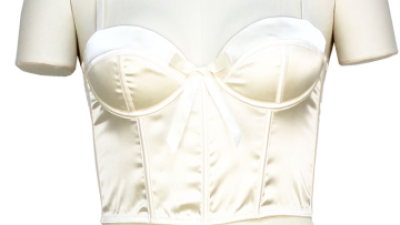
The Luxury Satin Super Soft Hand Feeling Corset combines refined elegance with a comfortable, smooth touch. Made from 90% polyamide and 10% elastane, its satin fabric feels soft against the skin while offering gentle flexibility for comfortable movement. The clean white color creates a timeless, graceful look, making it suitable for anyone who appreciates polished details and a sophisticated silhouette. Available in top size 75B and bottom size S, it is designed as a coordinated choice for a neat and balanced fit.
For an elegant styling approach, pair the corset with a flowing satin robe, a lightweight cardigan, or a tailored blazer to create contrast between delicate softness and structured outerwear. White also works beautifully with neutral shades such as beige, gray, black, or champagne, allowing the smooth fabric to remain the visual focus. For a more relaxed appearance, combine it with high-waisted trousers or a long skirt, keeping accessories simple with fine jewelry and understated footwear. The soft hand feeling and flexible fabric make it easy to adapt the look from refined indoor wear to a carefully styled fashion ensemble.
It combines denim with corset-inspired shaping. Typical details include panel seams, a close waist, adjustable straps, and metal hardware. Visible stitching adds structure. Lighter denim with elastane can improve movement.
Request a real-wear sample. Sit, bend, and fasten it repeatedly. Check comfort after two hours. Heavy boning may shape well but feel restrictive later.
Ask for fiber composition, denim weight, stretch recovery, and recycled-content evidence. Request shrinkage and colorfastness results. Photos cannot prove these details. Documents matter more.
Yes, especially after certain washing treatments. Rub the fabric against a white cloth when slightly damp. Test it beside light clothing. The result may be disappointing.
Review recent export experience, monthly capacity, lead times, and inspection records. Ask about cotton sources and dye-lot control. Slow replies during sampling deserve attention. I would not ignore that warning.
Inspect bust seams, waist seams, boning channels, zippers, and metal parts. Check seam strength and dimensional change after washing. Use natural light for color review. Small defects become costly later.
Confirm the tech pack, fabric swatch, measurements, trims, and wash effect. A fit sample may need revisions. Approve a pre-production sample before bulk cutting. Record every change with photos.
Compare three physical samples, not one. Write measurement tolerances clearly. Confirm remake costs and inspection responsibilities. A perfect sample can still fail in bulk production. That risk needs honest review.
A reliable Denim Corset Top manufacturer should offer a clear understanding of the product’s structure, including its fitted silhouette, supportive panels, denim weight, seams, closures, and styling flexibility for fashion, retail, and private-label collections. Global buyers should evaluate fabric quality, pattern accuracy, construction methods, size grading, wash effects, hardware, labeling, and customization options before placing an order. A capable supplier should also provide transparent production capacity, consistent quality control, professional sample development, and a clear approval process.
Buyers should review certifications, ethical production practices, workplace standards, and compliance documentation relevant to their target markets. Pricing should be assessed together with minimum order quantities, sample fees, lead times, packaging, payment terms, and shipping arrangements rather than as a standalone figure. By comparing communication efficiency, product consistency, testing procedures, production reliability, and after-sales support, international buyers can select a supplier that balances quality, flexibility, cost control, and dependable delivery for long-term cooperation.