Leave Your Message
0%

When you’re looking at top China Wrap Midi Dress manufacturers for global buyers, it really starts with a practical question: what makes a supplier dependable—beyond just a polished catalog?

The State of Fashion 2025, from The Business of Fashion and McKinsey & Company, predicts only low single-digit growth for the global fashion market. Non-luxury fashion? Probably around 2% to 4%. That’s pretty restrained, which makes purchasing discipline more important. Buyers need clear costs, stable quality, and flexible production.

Wrap Midi Dress styles still make commercial sense because they combine adjustable fitting with an easy, feminine silhouette. Diane von Furstenberg—the designer most closely linked to the wrap dress—said, “Feel like a woman, wear a dress.” It’s a lovely line, and it explains the design’s emotional appeal. But modern buyers also want measurable performance. Fabric recovery, waist-tie strength, colorfastness, stitching density, and size consistency all deserve a careful look.

A reliable Chinese manufacturer should give you samples, fabric details, inspection records, and transparent lead times. Some factories have impressive photos but weak follow-through. And that gap really matters.

This guide compares manufacturers using buyer-focused standards. It looks at production experience, customization capability, export communication, compliance awareness, and after-sales support. Still, verify the information directly. Supplier rankings can change, and one factory may be better for boutique orders than for large retail programs. That’s just the imperfect reality.

For global buyers, the best Wrap Midi Dress partner isn’t always the cheapest. It’s the supplier that turns a specification into a repeatable product. Buttons should line up. Ties should sit flat. The hem should hang evenly. Often, small details decide whether a collection earns repeat orders.
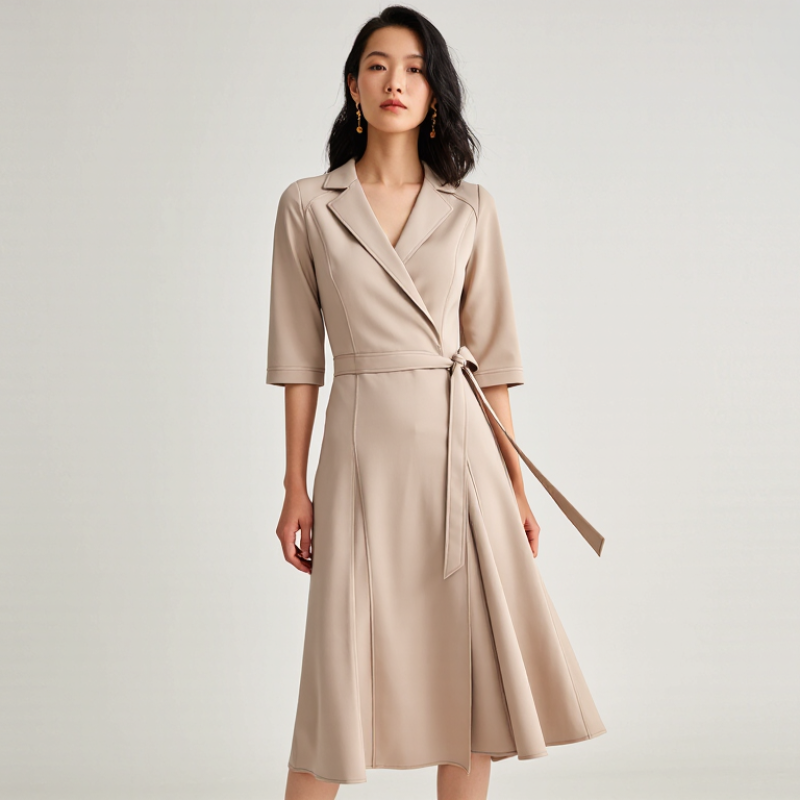
China Top Wrap Midi Dress Manufacturers for Global Buyers

What Is a Wrap Midi Dress?

A wrap midi dress has a front bodice that crosses diagonally and closes with a tie. Its hem usually falls between the knee and ankle. This shape creates an adjustable waist and a clear V-neckline. It is practical for buyers serving different body proportions. The tie should sit flat, not twist after movement. Good factories test this detail repeatedly.

The silhouette also depends on fabric behavior. A woven fabric with moderate drape follows the torso without clinging excessively. Satin can look elegant, but a Satin Midi Dress may expose pulling around the bust or waist. A small inner snap, clean binding, and stable seam allowance can improve security. That sounds simple. It is not.

Statista Consumer Market Insights estimated global women’s apparel revenue at more than 900 billion U.S. dollars in 2024, showing the scale of this purchasing category. McKinsey’s State of Fashion 2025 reported that fashion executives expected low growth and continued cost pressure. Therefore, global buyers should assess more than appearance. They should request wash tests, colorfastness results, graded measurements, and real fit samples. I have found that a beautiful sample can still fail during packing. The wrap panel may shift, or the waist tie may arrive creased. That uncomfortable detail deserves attention. A reliable manufacturer records corrections before bulk production, even when the change seems minor.

Why China Is a Leading Wrap Midi Dress Manufacturing Hub

China has become a leading wrap midi dress manufacturing hub because its supply chain is deep, fast, and highly specialized. The WTO’s World Trade Statistical Review 2023 recorded China as the world’s largest clothing exporter in 2022, with roughly 31% of global clothing exports. That scale supports competitive fabric purchasing, skilled pattern development, and efficient production for international buyers.

Wrap midi dresses require careful fitting. Waist ties, neckline overlap, and skirt movement must remain consistent across sizes. In supplier audits, buyers often find stronger results when factories manage pattern grading, sewing, pressing, and inspection together. China’s major apparel clusters also connect fabric mills, trim suppliers, sample rooms, and export logistics within short distances. This can reduce development delays. However, the system is not flawless. Quality may vary between factories, and low prices can hide weaker fabric recovery or rushed finishing. The International Trade Centre’s Trade Map data also shows China’s continuing importance in global apparel trade, but buyers still need independent verification.

Tips: Request a pre-production sample, fabric test, measurement chart, and wash report. Check tie strength and seam allowance. Ask for recent production evidence, not only showroom photos. A small pilot order is safer than trusting a polished presentation. Suppliers should explain their inspection steps clearly. Reflection matters here: speed is useful, but consistency protects the final product.

How to Evaluate Chinese Wrap Midi Dress Manufacturers

How to Evaluate Chinese Wrap Midi Dress Manufacturers

Evaluating Chinese wrap midi dress manufacturers requires more than comparing prices. Request a factory profile, production photos, export history, and recent audit records. Check whether the workshop cuts, sews, presses, and packs garments in-house. A reliable supplier should explain its daily capacity, minimum order quantity, and quality-control stages clearly. I also request a pre-production sample for an A Line Midi Dress, then measure the waist tie, hem, lining, and seam strength.

Material verification matters. Textile Exchange’s Materials Market Report 2024 estimated global fiber production at 124 million tonnes in 2023, with polyester representing about 57%. This scale makes fabric traceability essential. Ask for fiber composition records, colorfastness tests, shrinkage results, and certificates linked to the actual production batch. Do not accept a generic document without checking its date and scope. My own mistake was trusting a beautiful sample too quickly. It hid uneven stitching inside the wrap seam.

Tips: Compare three suppliers using the same tech pack. Inspect one finished carton before placing a large order. Confirm whether inspections are internal or independent. Ask how defects are recorded and corrected. A low quote may exclude testing, packaging, or realistic lead time. Keep communication in writing, including tolerances for measurements and acceptable defect limits. The OECD Due Diligence Guidance also supports risk-based supplier checks, especially for traceability and responsible business conduct. No audit is perfect. A second inspection can still reveal what the first missed.

China Top Wrap Midi Dress Manufacturers for Global Buyers - How to Evaluate Chinese Wrap Midi Dress Manufacturers

Evaluation Dimension What Global Buyers Should Check Practical Benchmark or Requirement Recommended Verification Method Suggested Weight
Wrap Midi Dress Expertise Experience with wrap construction, waist ties, neckline stability, skirt overlap and midi-length grading. The supplier should provide relevant samples with consistent overlap, secure tie attachment and a balanced hemline. Review technical samples, construction photos, measurement charts and fit-test results. 15%
Fabric and Material Control Fiber composition, fabric weight, drape, opacity, colorfastness, shrinkage and availability of lower-impact materials. Material specifications should be documented before sampling; testing should match the destination market and care-label requirements. Request fabric composition records, laboratory reports, shade bands and pre-production fabric approvals. 15%
Pattern and Size Grading Accuracy of the base pattern, grading across sizes, sleeve balance, bust coverage and waist placement. All key points of measure should be listed with agreed tolerances and independently checked during pre-production. Compare the approved tech pack, graded pattern, size-set samples and measurement inspection report. 15%
Minimum Order Quantity MOQ by style, color and fabric; flexibility for initial orders, test launches and repeat production. Compare the quoted MOQ with the buyer’s sales forecast; confirm whether small-batch production carries setup or surcharge costs. Obtain a written quotation showing MOQ, price breaks, color minimums and sampling charges. 10%
Production Capacity Monthly capacity, sewing-line organization, peak-season availability and ability to maintain quality at the required volume. Capacity claims should be supported by a production plan, available line space and realistic lead-time commitments. Review capacity schedules, production records and a factory audit or verified virtual assessment. 10%
Quality Assurance System Incoming-material inspection, inline checks, final inspection, defect classification and corrective-action procedures. A documented inspection process should cover measurements, seams, fabric defects, color, labels, pressing and packaging. Request inspection checklists, quality records, corrective-action reports and sample final-inspection documents. 15%
Compliance and Social Responsibility Business registration, labor practices, workplace safety, chemical controls and destination-market product requirements. Compliance documents should be current, traceable to the actual production site and relevant to the buyer’s market. Verify registration details, audit reports, test certificates and supply-chain documentation through independent checks. 10%
Lead Time and Delivery Reliability Sample turnaround, bulk production lead time, fabric procurement time, holiday planning and on-time delivery history. The supplier should separate sampling, material booking, production, inspection and shipping timelines. Ask for a milestone schedule and compare promised dates with documented historical delivery performance. 10%
Communication and Development Support Response speed, English-language clarity, tech-pack interpretation, sample revision management and ownership of approvals. A reliable supplier should confirm specifications in writing and maintain version control for artwork, patterns and measurements. Use a paid sample project to evaluate response quality, revision accuracy and documentation discipline. 5%
Export and Packaging Capability Commercial invoice accuracy, packing list, carton labeling, folding method, polybag requirements and shipping coordination. Packaging must protect the garment from moisture, crushing, staining and incorrect labeling during international transit. Review a shipping document set, packaging specification and pre-shipment carton inspection record. 5%
Total Evaluation Weight 100%

Buyer guidance: Score each supplier from 1 to 5 for every dimension, multiply the score by the suggested weight, and shortlist manufacturers only after sample approval, document verification and production-capacity confirmation.

Materials, Construction, and Customization Options

China Top Wrap Midi Dress Manufacturers for Global Buyers

Materials determine how a wrap midi dress feels, hangs, and survives repeated washing. Textile Exchange’s Materials Market Report 2023 recorded global fiber production at about 116 million tonnes in 2022. Polyester represented approximately 54% of that volume. Cotton remains important, but its softness can vary with fiber length and finishing. For a Floral Midi Dress, buyers should request fabric weight, fiber composition, shrinkage results, and colorfastness reports. Small details matter. A 180 gsm woven fabric may feel elegant, while a lighter fabric can expose the lining and distort the waist tie.

Construction affects both appearance and return rates. Reliable manufacturers usually reinforce tie openings, stabilize shoulder seams, and match prints across the front panels. A wrap dress needs careful grading because the overlap changes with every size. Buyers should inspect seam allowance, stitch density, hem balance, and pull strength. The Higg Materials Sustainability Index evaluates materials through environmental impact indicators, but it does not replace physical testing. That limitation deserves attention.

Customization may include recycled polyester, organic cotton, viscose blends, lining changes, adjustable ties, custom labels, and extended size ranges. The Global Organic Textile Standard requires at least 70% certified organic fibers for products labeled organic under its criteria. Certification must be verified, not assumed. Manufacturers can also provide pre-production samples, measurement charts, wash tests, and packaging adjustments. I have seen attractive samples fail after washing. A careful buyer should test the real production fabric, not only approve a digital sketch.

Sampling, Quality Control, and Compliance Requirements

China Top Wrap Midi Dress Manufacturers for Global Buyers

Sampling should test more than appearance. A wrap midi dress needs a stable waist tie, clean overlap, and reliable coverage during movement. Request a size-set sample, not one sample only. Measure bust, waist, hip, and skirt length after washing. Record shrinkage and twisting. A beautiful first sample can still fail production.

Use ISO 2859-1 for acceptance sampling and define an AQL before ordering. Inspect fabric shade, seam strength, stitch density, hem balance, and tie attachment. For silk-like fabrics, test colorfastness, pilling, and snagging. Textile Exchange’s 2024 Materials Market Report recorded 124 million tonnes of global fiber production in 2023. This scale makes fiber traceability increasingly important. Ask suppliers for composition records, transaction documents, and test reports from competent laboratories. Do not rely on copied certificates.

Tips: Send a signed measurement sheet. Approve a sealed reference sample. Photograph every critical detail. Test one packed dress after 24 hours. It exposes wrinkles and moisture problems. Compliance checks should match the destination market, including fiber labeling, chemical restrictions, flammability rules, and packaging requirements. European buyers should review REACH obligations and textile labeling rules. United States shipments may require applicable consumer-product testing. Requirements change, and supplier advice can be incomplete. Have an independent specialist verify the final documents before shipment.

China Top Wrap Midi Dress Manufacturers for Global Buyers

Reference sampling levels for apparel quality-control inspections

The chart shows the sample quantities commonly selected under ISO 2859-1 / ANSI/ASQ Z1.4 General Inspection Level II for different production-lot sizes. Actual sample size and acceptance criteria should be agreed with the buyer before inspection. AQL values are buyer-specified inspection parameters, while labeling, chemical safety, flammability, and documentation requirements depend on the destination market.

Pricing, Minimum Orders, and Global Shipping Considerations

China’s wrap midi dress sector offers flexible pricing for global buyers. A standard polyester style may cost $8–$18 per unit at factory level. Premium viscose, lining, and custom prints can raise costs above $25. These are practical sourcing benchmarks, not fixed quotations. Request fabric composition, size grading, packaging, and inspection fees in writing. The Bodycon Midi Dress category often needs stronger stretch recovery, which can increase material costs.

Many manufacturers set minimum orders between 100 and 300 units per color. Smaller trial orders may carry sampling or setup charges. McKinsey’s State of Fashion 2024 projected only 2–4% global fashion growth, making inventory control more important for new buyers. Split colors carefully. Ten colors with 100 units each can create slow-moving stock.

Shipping changes the landed price sharply. UNCTAD’s Review of Maritime Transport 2023 reports that over 80% of global merchandise trade by volume moves by sea. Sea freight usually suits larger orders, while air freight supports urgent replenishment. Allow roughly 25–45 days for ocean delivery and 5–10 days for air, excluding customs delays. Confirm Incoterms, carton dimensions, export documents, duties, and destination taxes before payment. The spreadsheet is never the whole truth. Port congestion, currency changes, and damaged cartons still occur. A pre-shipment inspection and a small pilot order can expose weak stitching before the main shipment.

FAQS

What defines a wrap midi dress?

Its front bodice crosses diagonally and closes with a tie. The hem falls between the knee and ankle. It creates an adjustable waist and V-neckline.

Which fabric works well for a wrap midi dress?

Choose woven fabric with moderate drape. It should follow the torso without clinging too much. A 180 gsm fabric may offer better coverage.

What problems can satin fabric create?

Satin can reveal pulling around the bust or waist. A small inner snap may improve security. Clean binding also helps.

What construction details should buyers inspect?

Check flat tie openings, stable shoulder seams, and balanced hems. Inspect stitch density and seam allowance. The wrap panel should not shift during movement.

Why are graded measurements important?

The overlap changes across sizes. Each size needs a carefully adjusted front panel and tie length. One measurement cannot fit every body proportion.

Which tests should buyers request before production?

Request wash tests, shrinkage results, colorfastness reports, and real fit samples. Digital sketches are not enough. Test the actual production fabric.

Can manufacturers customize this dress style?

Possible options include lining changes, adjustable ties, extended sizes, and different fiber blends. Custom labels and packaging changes may also be available.

How can buyers reduce quality problems during bulk production?

Record every sample correction before production begins. Inspect creased ties, exposed lining, and shifted panels. Small issues become expensive later.

Does certification prove the material is suitable?

No. Certification can support material claims, but it does not replace physical testing. That limitation is easy to overlook.

What should buyers remember about a beautiful sample?

A beautiful sample can still fail after washing or packing. I would inspect it again. Perfection is not guaranteed.

Conclusion

This guide introduces the Wrap Midi Dress, a versatile garment known for its adjustable wrap closure, flattering midi length, and suitability for many seasons and occasions. It explains why China has become a major manufacturing hub, supported by established textile supply chains, skilled production teams, flexible capacity, and competitive pricing. Global buyers will learn how to evaluate manufacturers by reviewing experience, communication, production capabilities, certifications, and past sample performance.

The article also covers fabric selection, garment construction, sizing, color development, labeling, packaging, and other customization options. It highlights the importance of clear specifications, pre-production samples, quality inspections, testing, and compliance with destination-market requirements. Finally, it discusses pricing factors, minimum order quantities, payment planning, lead times, and international shipping considerations. With a structured sourcing process and careful supplier assessment, buyers can develop reliable Wrap Midi Dress collections that balance style, quality, cost, and delivery efficiency.
Evelyn

Evelyn

Evelyn is a seasoned marketing professional at Okleebody Co., Ltd., a premier provider of high-quality ladies lingerie and mens underwear. With a strong background in the export guide industry, she has played a pivotal role in establishing the company as a global leader since its inception in 2006.......
Previous 2026 Best Lace Bra Types for Wholesale Buyers?