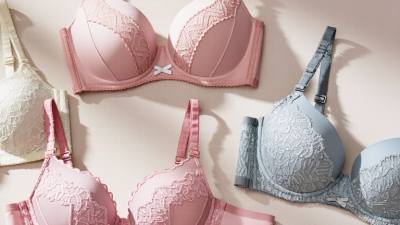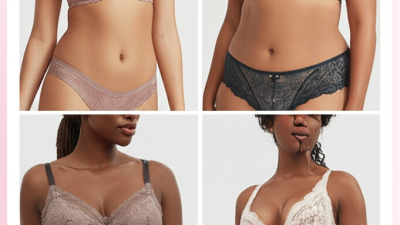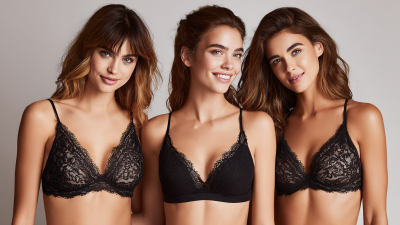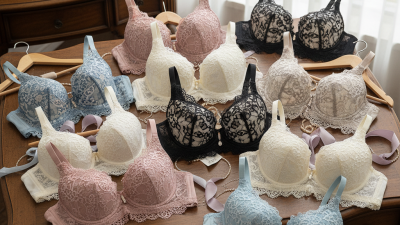
Lace Bras are still a solid category for wholesale lingerie buyers. People want texture, a feminine feel, and styles that are easy to work with. Grand View Research put the global lingerie market at about USD 88.32 billion in 2023, and the same analysis expects growth through 2030. That's good news, sure—but it also means more competition. Pretty lace by itself? It won't guarantee repeat orders.
When you're buying wholesale, you've got to connect market data with how the product actually feels. Buyers should check lace softness, seam stability, strap adjustment, cup support, and color consistency. A sample can look gorgeous online and then feel scratchy after a few minutes. And that matters. Research and Markets points to product quality, shifting consumer preferences, and online retail growth as big influences in lingerie. So comfort and reliable construction deserve just as much attention.
For suppliers, look at material composition, size grading, production capacity, quality-control records, and how fast they communicate. OEKO-TEX® certification can be useful evidence that textiles have been tested, but buyers should still verify the certificate's scope and validity. Grand View Research and Euromonitor International offer helpful market views, but their estimates can't replace your own local sales data. That's where judgment comes in. A style that's in high demand somewhere might flop in a specific retail channel. So compare samples, calculate landed costs, think about return risks, and try a limited order before scaling up. No method is perfect. Even seasoned buyers can misread a trend. The real goal is a balanced Lace Bras collection—one that works on appearance, comfort, margin, and dependable supply.
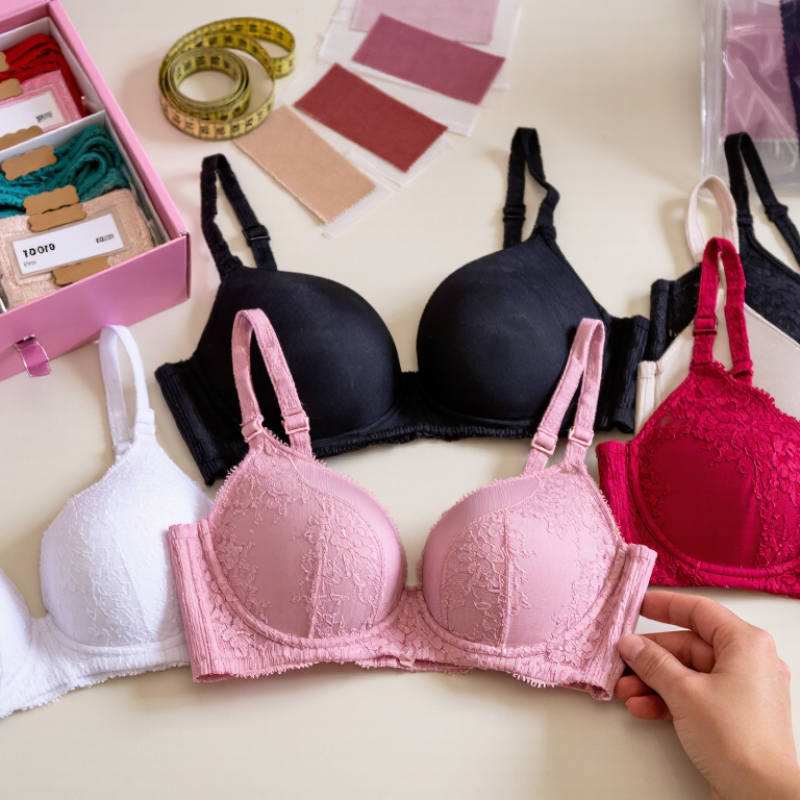
Wholesale lace bra buying starts with market definition, not a catalog search. A lingerie boutique serving bridal customers needs a different range from an online comfort retailer. Map the selling channel, price band, season, and average order value before selecting styles. Then describe the actual customer. Record age range, fit concerns, preferred coverage, colors, and purchase motivation. A customer seeking soft support may reject dramatic boning, even when product photos look attractive.
Use sales data and direct conversations together. Review returns, size exchanges, abandoned carts, and comments about straps or underwire pressure. Ask buyers to handle samples under normal store lighting. Check lace softness, seam stability, hook alignment, cup depth, and stretch recovery. For a Lace Corset, confirm whether customers value shaping, decorative structure, or both. Wholesale testing should begin with a controlled assortment, perhaps three silhouettes and practical core colors. This reduces dead stock.
Reliable suppliers should provide measurable specifications, material details, size grading, and repeat-order timelines. Request pre-production samples and compare them with approved measurements. Keep a fitting record; memory is unreliable. I have seen attractive samples fail after repeated washing, so durability deserves equal attention. Still, one fitting session cannot represent every body. That limitation should shape the next order. Track performance by size and customer type, then adjust quantities instead of trusting instinct. A low-cost style may sell quickly, but frequent returns can damage margin and customer trust.
When evaluating lace bras for wholesale, compare the lace before judging its appearance. Stretch lace offers comfort and adapts to different body shapes. Rigid lace gives stronger structure but may feel restrictive. Embroidered lace looks refined, yet raised threads can catch during packing. Run your fingers across the surface. Check for rough edges, loose threads, and uneven patterns. A lace bra should feel soft, not merely look attractive.
Construction often separates reliable stock from disappointing stock. Inspect the underwire channel, hook alignment, strap adjusters, and side seams. The stitching should remain flat against the skin. Pull the band gently, then release it. Good elastic should recover without twisting. Test a sample after washing, because some lace loses shape quickly. Use the same checks for a Lace Bodysuit, especially around the gusset and leg openings. Small stress points can create high return rates.
Overall quality also depends on consistent sizing. Measure several pieces from the same shipment, not just one sample. Cups, bands, and straps should match the approved measurements. A soft lining can improve comfort, but excessive padding may change the intended fit. I once trusted a beautiful lace surface and overlooked weak hook stitching. That was a costly reminder. Visual appeal is useful, but it cannot replace hands-on inspection, wear testing, and clear factory records. Ask for material details and production tolerances before placing a large order.
For wholesale buyers, lace appeal must not hide weak support. Check underband recovery, cup stability, strap width, and wire placement on live fit models. A practical test uses three body shapes and repeated wear after washing. Small details matter. A Lace Corset Top may look structured, yet thin elastic can roll during movement.
Comfort should be measured, not guessed. Record pressure points after sitting, bending, and wearing the bra for eight hours. Review fiber content, seam bulk, lining softness, and lace abrasion. ISO 8559-1 provides consistent body-measurement definitions, helping factories compare bust, underbust, and waist data accurately. Still, measurements alone miss posture and breast distribution. That is where many size charts fail.
Sizing consistency protects wholesale margins. Order pre-production samples across the full size range, then compare cup depth, band length, and strap position. Allow only documented tolerances between batches. The NRF and Appriss Retail 2023 Consumer Returns Report estimated $743 billion in U.S. retail returns, equal to 14.5% of annual sales. Fit-related returns are not the only cause, but inconsistent grading can increase them. Ask suppliers for measurement sheets, wash-test results, and defect records. A small factory error can become a costly customer complaint. I would also keep one critical question open: does the bra support real movement, or only a studio pose?
How to Choose the Best Lace Bras for Wholesale Buyers?
Supplier reliability should be tested through evidence, not attractive promises. Ask for business registration details, factory addresses, and recent production references. A dependable supplier answers clearly about lead times, minimum order quantities, and payment terms. Request a sample before placing a large order. Check the lace edges, cup shape, strap recovery, and stitching under normal handling. Small flaws matter.
Certifications need careful verification. Ask for current documents covering textile safety, quality management, and social responsibility where relevant. Confirm the certificate holder, factory address, validity dates, and product scope. A certificate from a trading office may not cover the actual production site. Contact the issuing organization when details look unclear. Do not rely on a polished PDF alone.
Production capacity also affects every shipment. Request monthly output, active production lines, staffing levels, and peak-season schedules. Ask how the supplier controls color matching, size grading, and final inspections. For lace bras, production records should show checks for elastic tension and delicate seam strength. A practical test is useful: place a small trial order and compare the promised timeline with the actual delivery. Inspect carton counts and defect rates on arrival. Suppliers can make mistakes. I once underestimated delays caused by fabric approval, and that assumption affected the launch schedule. Leave room for revisions, especially when custom lace or packaging is involved. Availability may look strong on paper. Verify it on the factory floor.
| Evaluation Dimension | What to Check | Reliable Evidence | Suggested Screening Benchmark | Buyer Priority |
|---|---|---|---|---|
| Business Reliability | Length of operation, legal registration, factory address, ownership information, and export experience. | Current business license, factory profile, production-site photographs or video, and verifiable trade references. | Supplier provides consistent legal and operational information, with no unexplained differences between documents and factory details. | High |
| Quality Management | Whether the supplier operates a documented quality-management system for materials, sewing, measurement, and final inspection. | Valid ISO 9001 certificate issued by an accredited certification body, internal inspection records, corrective-action reports, and a sample quality report. | Documented incoming-material inspection, in-process checks, final inspection, and traceable handling of defects. | High |
| Textile Safety | Testing of lace, elastic, hooks, underwire coatings, dyes, and other components for harmful substances. | Product-specific test reports from a competent laboratory; OEKO-TEX Standard 100 certification where applicable; REACH-related test or compliance documentation for the destination market. | Reports identify the tested product or component, test date, applicable standard, laboratory, and pass result. Certificates should cover the actual materials supplied. | High |
| Organic Material Claims | Verification of organic claims for cotton or other organic fibers used in the bra body, lace, lining, or packaging. | Valid GOTS transaction certificates and scope certificates covering the relevant facility and product category. | For GOTS labeling, products marketed as “organic” generally require at least 95% certified organic fibers; “made with organic” generally requires at least 70% certified organic fibers. | Medium |
| Social Compliance | Working hours, wages, occupational safety, forced-labor prevention, child-labor prevention, and grievance procedures. | Recent third-party social audit report or certification such as SA8000, plus evidence that corrective actions have been closed. | Audit findings are recent, facility-specific, and supported by corrective-action records rather than a logo or undated certificate alone. | High |
| Production Capacity | Monthly output for comparable lace-brassiere styles, number of sewing lines, specialist operators, cutting capacity, and peak-season availability. | Capacity statement, line-loading plan, production-floor video call, machine list, and anonymized production records for similar products. | Capacity is demonstrated using products with similar construction, lace placement, cup structure, padding, and size range; available capacity is confirmed for the requested delivery window. | High |
| Lead Time Control | Sample-development time, approval-to-production lead time, material procurement time, and replenishment speed. | Written production schedule, material lead-time list, approval workflow, and records from previous comparable orders. | Supplier separates sampling, material sourcing, bulk production, inspection, and shipping time instead of quoting one vague total lead time. | High |
| Minimum Order Quantity | MOQ by style, color, size ratio, lace pattern, and custom label or packaging requirement. | Official quotation showing MOQ rules, sample charges, grading charges, and small-order surcharges. | MOQ is stated separately for stock materials, custom-dyed materials, custom lace, private labels, and new molds or patterns. | Medium |
| Quality Performance | Defect rate, measurement accuracy, shade consistency, lace alignment, stitch security, and hardware functionality. | Pre-shipment inspection reports, approved measurement specification, defect classification, and random inspection results. | Agree on an inspection standard and AQL level in the purchase contract; define critical, major, and minor defects before production starts. | High |
| Material and Component Traceability | Traceability of lace, elastic, lining, padding, hooks, straps, dyes, and packaging materials. | Material declarations, batch records, supplier invoices or certificates where appropriate, and component approval samples. | Each production lot can be linked to approved materials and retained samples, especially for color-sensitive lace and skin-contact components. | High |
| Delivery Reliability | On-time shipment history, production-progress reporting, contingency planning, and communication response time. | Anonymized delivery records, order-status templates, escalation contacts, and written procedures for material shortages or line disruptions. | Supplier reports delays before the agreed milestone, provides a recovery plan, and confirms the effect on quantity, quality, and shipment date. | High |
| Commercial Transparency | Pricing structure, payment terms, tooling or sampling fees, packaging costs, inspection charges, and change-order costs. | Itemized quotation, pro forma invoice, payment schedule, and written terms for sample approval and production changes. | All one-time and recurring costs are listed separately, with no material substitution or price change without written approval. | Medium |
| Final Supplier Approval | Overall fit between the supplier’s certificates, quality system, capacity, price, and target market requirements. | Completed supplier scorecard, approved pre-production sample, verified documents, and signed quality and delivery requirements. | Approve only after document verification, sample evaluation, and confirmation that the supplier can meet the required volume and delivery schedule. | High |
Wholesale buyers should treat lace bras as a landed-cost problem, not a factory-price bargain.
Grand View Research valued the global lingerie market at USD 91.32 billion in 2023. Its 2024 outlook projects 5.2% compound annual growth through 2030. Demand looks healthy, but growth does not rescue weak purchasing math. When reviewing a Lace Bustier Top, I inspect stretch recovery, seam strength, cup shape, and lace snagging.
Use a worksheet for every color and size run.
Assume a supplier quote of $6.80 per bra, $0.45 packaging, $0.25 inspection, and $1.10 freight. The landed cost becomes $8.60 before storage, payment fees, and returns. At a $14.50 wholesale price, gross profit equals $5.90, or 40.7%.
A 300-piece MOQ therefore ties up $2,580 before selling begins. Add sampling, photography, and a five-percent defect allowance. That allowance is easy to forget. Stay skeptical.
McKinsey’s State of Fashion 2025 reported that 80% of fashion executives expected conditions to worsen or remain unchanged.
That caution supports smaller test orders. Ask for 100 to 300 units initially, then reorder proven sizes. Track sell-through weekly; 70% within eight weeks can be a useful internal target, not an industry guarantee.
One flawed assumption remains: I often price samples too low. Sampling includes labor, revisions, and delayed cash flow. Margins can disappear. Build those costs into the first order.
Wholesale lace bra buyers should inspect physical samples before discussing volume. Check lace softness, seam tension, hook alignment, and cup recovery after stretching. Wear the sample for several hours if possible. A beautiful bra can still cause itching or shifting. Measure band length after washing, not only from the supplier’s chart. Textile testing should include colorfastness, shrinkage, and seam strength. These checks reduce costly surprises.
Packaging also deserves a close review. Ask for carton dimensions, inner protection, material details, and packing photos before approval. The IBM Institute for Business Value reported that 57% of surveyed consumers were willing to change purchasing habits to reduce environmental impact. Excess plastic may therefore weaken a buyer’s retail position. Still, removing all protection can damage lace during transport. That trade-off needs testing. I have seen attractive packaging arrive with crushed corners and damp tissue.
Customization should be written into the purchase specification. Confirm lace patterns, shade references, size labels, care instructions, barcode placement, and minimum order quantities. Request a pre-production sample. One overlooked label can affect an entire shipment. Return terms must define inspection time, defect evidence, replacement timing, and responsibility for freight. NRF and Appriss estimated US retail returns reached 14.5% of sales in 2023, worth about $743 billion. That figure covers all retail, not lingerie, but it shows why clear return controls matter. Vague terms create friction. Some details may still fail in practice. Review them again.
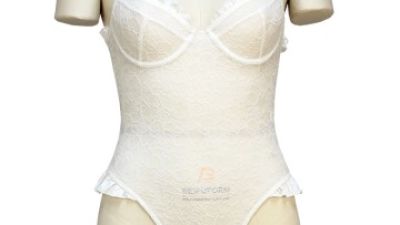
Elegant Bridal Lingerie can transform a wedding-day look with delicate texture, graceful shaping, and a touch of romance. This sheer push-up bodysuit features embroidered lace that creates an airy, refined appearance while adding visual depth to the design. The transparent panels are balanced by carefully placed floral details, making the piece alluring yet elegant for bridal preparation, a honeymoon wardrobe, or a special private moment. Its ruffled accents soften the silhouette and bring a charming, feminine finish.
Designed with push-up underwire support, the bodysuit gently enhances the bust while helping create a beautifully defined shape. Made from 90% polyamide and 10% elastane, the fabric offers a smooth, flexible feel that moves comfortably with the body. The classic white color complements traditional bridal styling and pairs naturally with a robe, satin skirt, or delicate accessories. Available in top size 75B and bottom size S, this style is identified as K171647 and is suited to those who appreciate romantic lace, graceful details, and a polished sheer effect.
Identify your selling channel, price range, season, and average order value. A bridal boutique needs different styles from an online comfort retailer.
Record age, fit concerns, coverage preferences, colors, and buying motivations. Soft-support customers may reject dramatic boning, despite attractive photos.
Inspect samples under normal store lighting. Check lace softness, seams, hook alignment, cup depth, and stretch recovery.
Start with about three silhouettes and practical core colors. This limits dead stock. It may still miss unusual customer preferences.
Review returns, size exchanges, abandoned carts, and comments about straps or underwire pressure. Track results by size and customer type.
Request material details, measurable specifications, size grading, and repeat-order timelines. Compare production samples with approved measurements.
Add the product, packaging, inspection, and freight costs. For example, $6.80 plus $0.45, $0.25, and $1.10 equals $8.60.
Include storage, payment fees, returns, sampling, photography, and a five-percent defect allowance. A 300-piece order at $8.60 ties up $2,580.
Usually, request 100 to 300 units initially. Reorder proven sizes after weekly sell-through checks. Large orders can turn attractive samples into expensive inventory.
Washing durability often receives too little attention. A beautiful sample may fail after repeated washing. One fitting session proves very little.
Choosing the best Lace Bras for wholesale requires a clear understanding of your target market, customer preferences, and expected price range. Buyers should compare lace materials, stitching quality, cup construction, straps, closures, and overall durability to ensure the products meet customer expectations. Equal attention should be given to support, comfort, size availability, and fit consistency, since these factors strongly influence satisfaction and repeat purchases.
Before placing an order, evaluate the supplier’s communication, certifications, production capacity, quality-control procedures, and ability to maintain consistent delivery schedules. Calculate the full wholesale cost, including shipping, packaging, duties, and customization, then compare it with realistic retail prices to protect profit margins. Request samples to inspect fit, finish, color accuracy, packaging, and labeling. Finally, confirm minimum order quantities, customization options, defect handling, replacement policies, and return terms so your purchase is financially sound and operationally reliable.